
An employee handbook should help protect your business, establish clear expectations, and provide employees and managers with consistent guidance. But when policies are outdated, incomplete, or inconsistent with actual workplace practices, your handbook can become a source of confusion and unnecessary risk.
At Blueprint HRM, we regularly review employee handbooks for organizations across different industries. While every business is unique, we often encounter the same preventable mistakes.
Is Your Handbook Raising Any Red Flags?
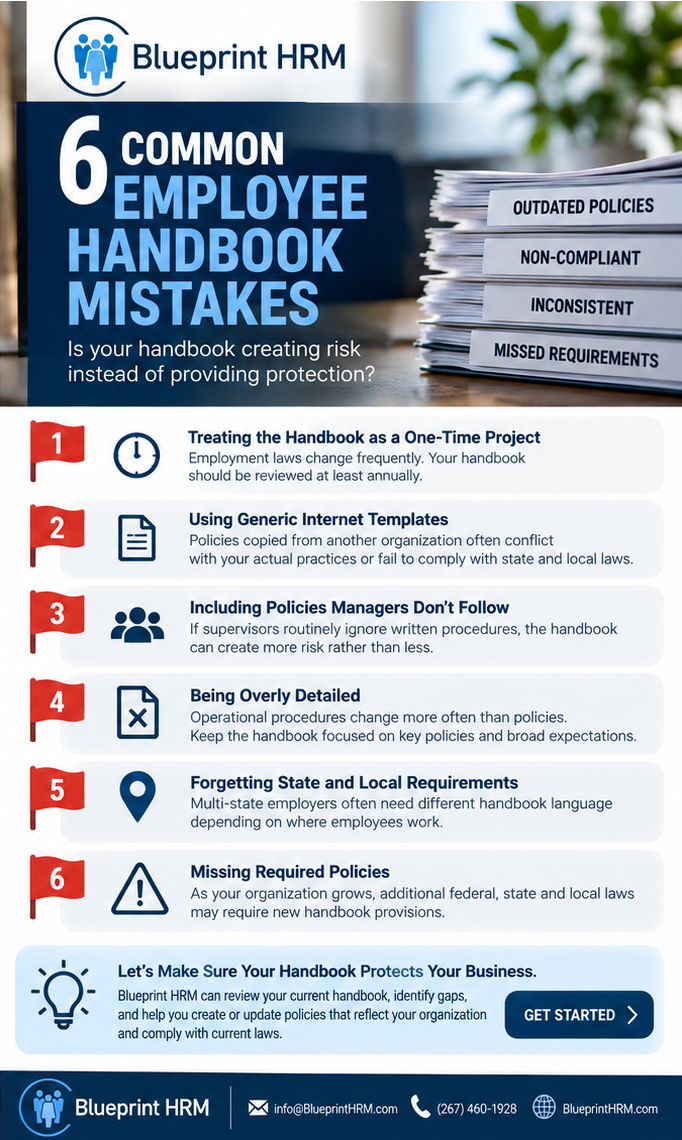
We’ve identified six common employee handbook mistakes that employers should watch for. Take a look at our check list to see whether any of these red flags apply to your organization. Even small oversights can create unnecessary risk, making regular handbook reviews an important part of maintaining HR compliance.
Don’t Wait Until There’s a Problem
An outdated handbook may go unnoticed until an employee complaint, workplace dispute, or compliance issue brings its shortcomings to light. Regular handbook reviews can help identify potential problems before they become more difficult or costly to address. Your handbook should reflect your organization, support consistent management practices, and comply with applicable employment laws.
Let’s Make Sure Your Handbook Is Working for You
Not sure whether your handbook is current or adequately protecting your business? Blueprint HRM can review your existing handbook, identify potential compliance gaps, and help you update policies to reflect your organization’s needs and workplace culture.
Don’t let an outdated handbook create unnecessary risk. Contact Blueprint HRM to schedule an Employee Handbook Review.
Additional Employee Handbook Resources.
10 Policies Every Employee Handbook Should Include
Why Updating Your Employee Handbook Could Be the Best Investment You Make This Year