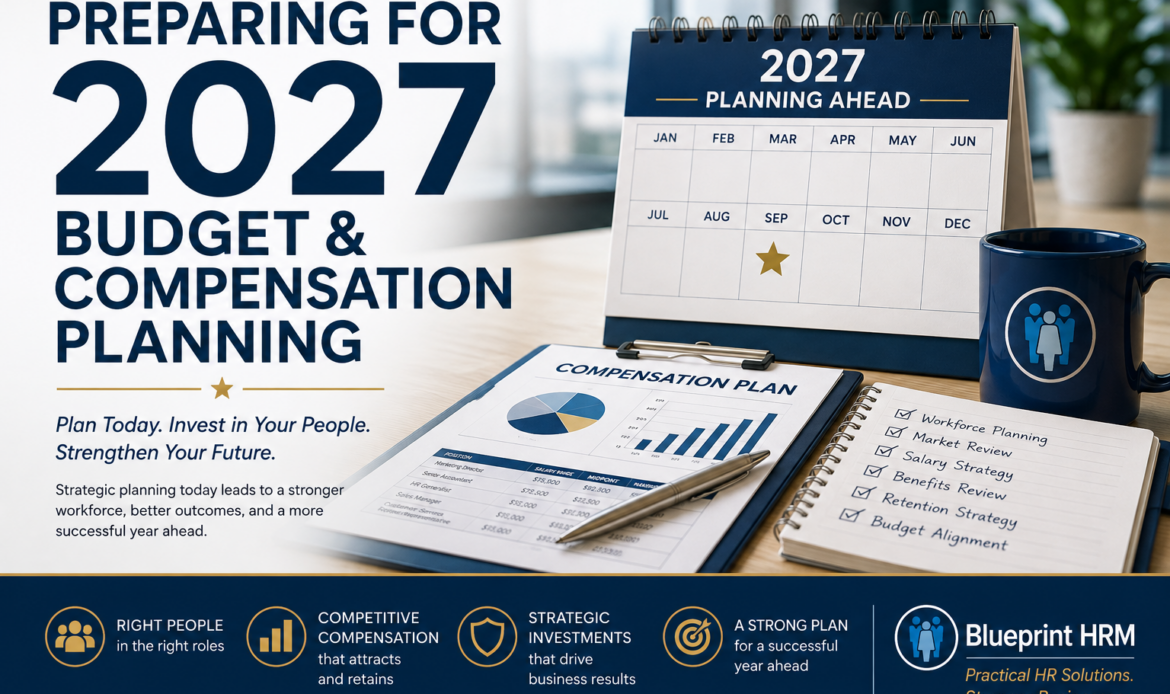
As summer comes to an end, many business leaders are beginning their 2027 budget and compensation planning. Budgets are being developed, strategic initiatives are taking shape, and leadership teams are deciding where to invest their resources. While these conversations often focus on revenue, operations, and technology, one area is sometimes overlooked until it’s too late: your people strategy.
The reality is that employee-related expenses are often an organization’s largest investment. Salaries, benefits, recruiting costs, payroll taxes, training, and employee development represent a significant portion of most operating budgets. Yet many companies don’t involve HR until after the budget has already been finalized.
Organizations that plan proactively don’t just budget for employees—they develop a workforce strategy that supports their business goals.
Start with Your Business Objectives
Before discussing salary increases or hiring plans, consider where your business is headed over the next year. Ask yourself:
- Are you planning to grow your workforce?
- Will you be expanding into new markets or launching new services?
- Are there critical positions that will need to be filled?
- Do you anticipate retirements or increased turnover?
- Are there skills your current workforce will need to remain competitive?
Your workforce plan should support these objectives. Hiring reactively often results in rushed decisions, longer vacancies, and higher recruiting costs.
Look Beyond Annual Raises
Compensation planning involves much more than deciding what percentage increase employees will receive. A comprehensive review should evaluate:
- Market competitiveness
- Internal pay equity
- Salary compression
- Promotion opportunities
- Incentive or bonus programs
- Pay transparency considerations
- Retention risks among high-performing employees
Labor markets continue to evolve, and compensation expectations change with them. Reviewing salary data annually helps ensure your organization remains competitive while maintaining internal fairness.
Budget for the Full Cost of Employment
Salary is only one component of employee costs. When preparing your budget, don’t forget to account for:
- Health insurance and employee benefits
- Payroll taxes
- Retirement plan contributions
- Workers’ compensation insurance
- Recruiting and advertising expenses
- Background checks and pre-employment testing
- Onboarding materials and technology
- Professional development and training
- HR software and compliance tools
Considering the full cost of employment provides a more accurate picture of future workforce investments and helps prevent unexpected expenses throughout the year.
Review Your Organizational Structure
Fall is an excellent time to evaluate whether your current organizational structure still supports your business. Consider questions such as:
- Are managers overseeing too many direct reports?
- Have responsibilities shifted since job descriptions were last updated?
- Are there opportunities to cross-train employees?
- Are employees performing work that no longer aligns with their role?
Making thoughtful adjustments before the new year allows for a smoother transition and positions employees for success.
Identify Compliance Risks Before Budget Season Ends
Planning isn’t just about investing in your workforce—it’s also about protecting your organization. As part of your year-end review, evaluate:
- Employee classifications (exempt vs. non-exempt)
- Independent contractor relationships
- Overtime practices
- Employee handbook updates
- Required workplace training
- Leave administration
- Personnel file documentation
- Hiring and onboarding processes
Addressing these items proactively can reduce legal risk and avoid costly surprises later.
Invest in Managers
One of the best investments an organization can make is developing its leaders. Managers influence employee engagement, productivity, retention, and workplace culture every day. Budgeting for leadership development, communication training, performance management skills, and coaching can produce long-term benefits that extend well beyond the HR department.
End the Year with a Plan—Not Just a Budget
A successful budget doesn’t simply allocate dollars—it aligns people, processes, and priorities with the organization’s strategic goals.
Taking time this fall to evaluate your workforce, compensation strategy, organizational structure, and HR practices will help your organization enter 2027 with confidence. Instead of reacting to hiring challenges, compliance issues, or employee turnover, you’ll be prepared with a thoughtful plan that supports both your employees and your business.
Blueprint Takeaway
The strongest organizations don’t wait until January to think about their people strategy. They use the fall planning season to evaluate where they are today, identify where they want to go tomorrow, and build an HR strategy that supports long-term success. As you begin your 2027 planning discussions, make sure HR has a seat at the table. Your people are one of your greatest investments—and one of your greatest opportunities for growth.
Ready to Start Planning for 2027?
Your people strategy should be an important part of your business planning—not an afterthought. Whether you’re evaluating compensation, planning for growth, reviewing your organizational structure, or simply trying to determine where your HR dollars will have the greatest impact, Blueprint HRM can help.
Let’s make sure your HR strategy is ready for where your business is going.
Contact Blueprint HRM to start the conversation and build a practical people plan for 2027 that supports your employees, your budget, and your business goals.